
PIN or badge, signed in by the pool
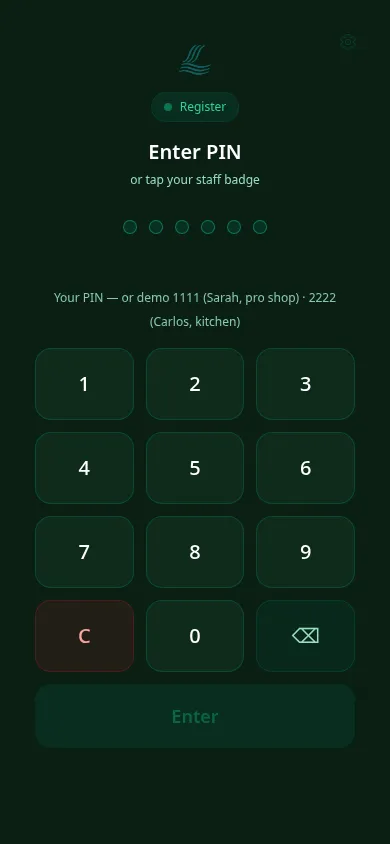
A four-digit PIN — or a staff badge tapped on the phone’s NFC — signs a server in anywhere. Shared devices swap hands between staff without anyone digging for a password.
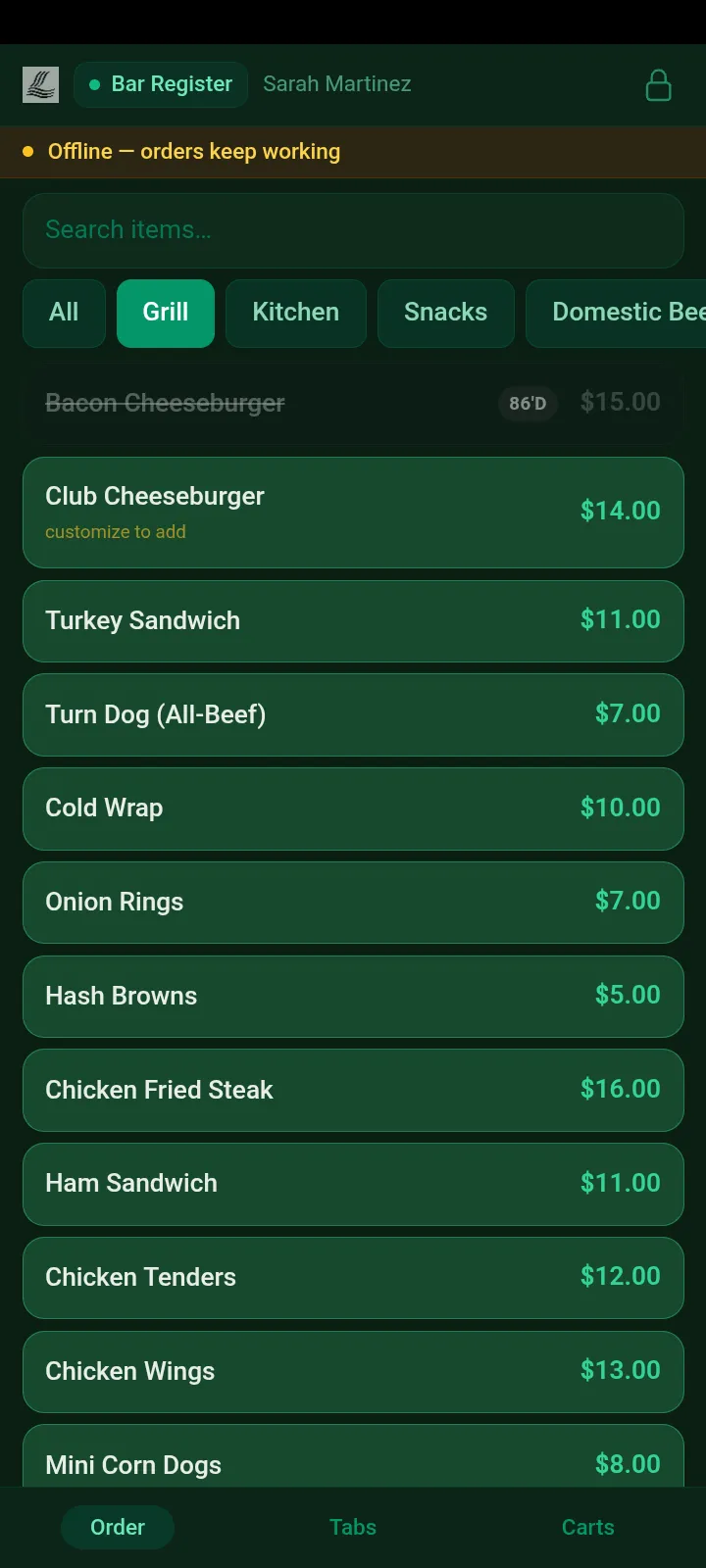
The handheld register is a portrait app built for Android phones — not the desktop screen squeezed smaller. PIN or badge in, ring the sale, charge the member, fire the kitchen — poolside, on the patio, or halfway down the cart path. Tablets at fixed stations run the full landscape register from the same platform.
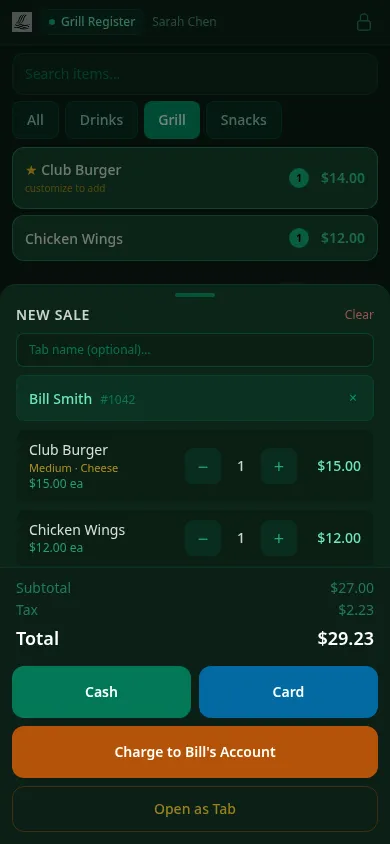
Order, Tabs and Carts sit on a bottom bar under the thumb; the sale rides in a sheet that slides over the menu. It’s the same catalog, the same members and the same books as every register inside — arranged for a phone instead of shrunk onto one.
A four-digit PIN — or a staff badge tapped on the phone’s NFC — signs a server in anywhere. Shared devices swap hands between staff without anyone digging for a password.
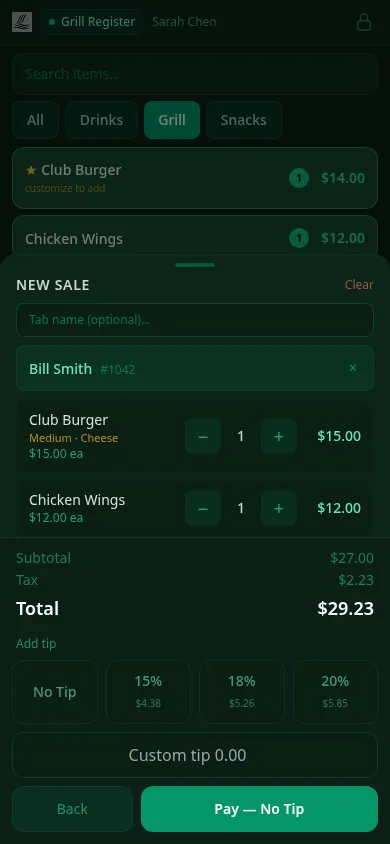
Type a few letters, attach the member, and “Charge to their account” appears next to Cash and Card — the same tenders and tip step as the fixed registers, on a phone.
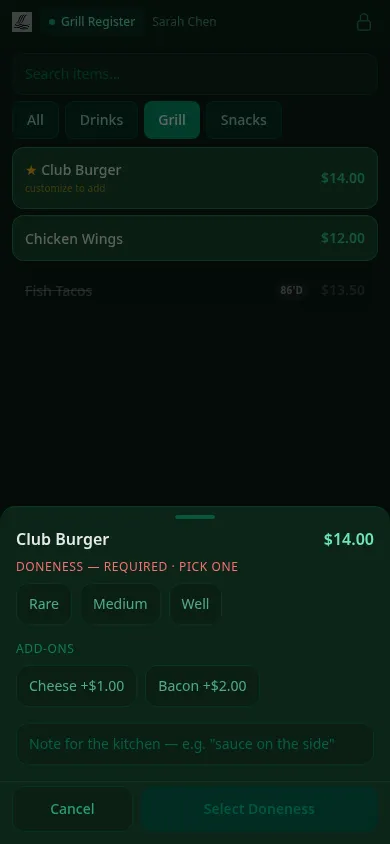
Items that need a temperature or a required choice open the modifier sheet and won’t add until it’s picked — “how did you want that burger?” gets asked at the table, not by the cook.
Open a sale as a tab, hand the phone off, and resume it later — from the same device or the register inside. Every open tab is one tap away in the Tabs view.
Orders placed from carts on the course show up in the Carts view with the hole they’re headed to — mark them out for delivery and delivered in two taps as the runner works.
Every item added is on the kitchen display before the server has left the table — same order pipeline, same “86” sync, same books as every other register in the club.
Club wifi has edges — the far end of the range, the event lawn, the turn. A handheld that throws a spinner at the edge of coverage is a register your staff stops trusting. This one is built the other way around.
The app shell, the menu and a slim member roster are cached on the device — a server who walks off the patio and out of wifi range keeps ringing items, attaching members and closing sales.
Offline actions land in a durable outbox on the device and replay when the connection returns. Every write carries a client reference the server deduplicates on — a flaky reconnect can’t double-ring a burger or post a charge twice.
Cash, charge-to-account and open-as-tab all work offline. Card tenders are deliberately never queued offline — a payment that needs a live connection says so up front, and the banner clears itself the moment you’re back.
Staff badges are NFC cards, and most Android phones already have the radio to read them — so a badge tap on the back of the phone signs a server in, the same tap that works on the wedge readers at fixed registers.
On phones with an NFC radio, the ClubCore Android app reads the badge directly — tap the back of the phone and you’re signed in. No accessory to buy or lose.
Every handheld also takes a four-digit PIN, so a phone without NFC — or a server without their badge — is never locked out of a shift.
The tap layer is a pluggable contract, not a hardcoded radio — attachable USB-C readers are on the roadmap and will slot into the same app when they land. Member charging on the handheld is by name search today.
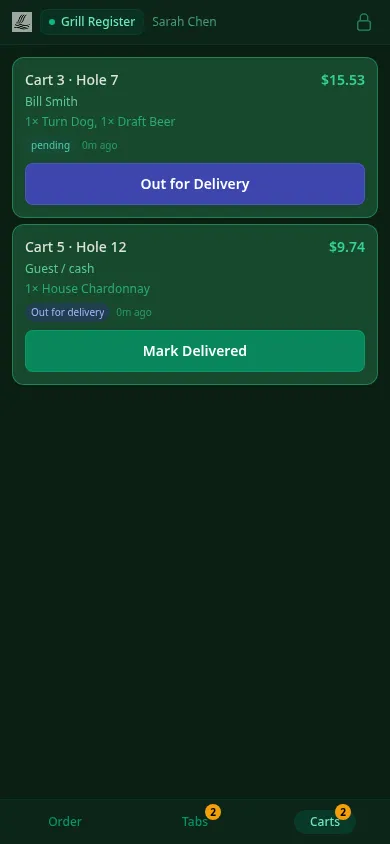
When a member orders from a cart on the course, that order needs to reach a human with a bag of food. The handheld’s Carts view is that human’s screen: each order shows the hole it’s bound for, flips to out for delivery when the runner leaves, and delivered when it’s handed over — so the clubhouse always knows what’s still in flight.
Want the operator’s walkthrough of registers, tickets and shift close? It’s in the Point of Sale guide.
We'll hand you a personal sandbox seeded with a full club — menu, members and three years of books — then walk your team through it.
Prefer email? [email protected] · ClubCore by Atlas Core Technologies, New Braunfels, Texas